



































By Dr. Tamara L. Young, Public Information for the World’s Luckiest Fishing Village
Isaias was the first hurricane to make landfall in the United States in two years, and it arrived two years to the day after Milton. It came at the end of a season so quiet that it set a record for the latest first hurricane in the modern era. A conversation with Mayor Bobby Wagner about the storm, the spotlight and the neighbors who showed up.
TY: By October, a lot of people had mentally closed the book on hurricane season, and that is what made Isaias so dangerous. A quiet season builds confidence, and confidence is the enemy of preparation. In about three days, a disturbance in the southern Gulf became a major hurricane pointed straight at Destin.
BW: And it left very little time to change anyone’s mindset. Isaias was a Category 3 that morning and weakened to a Category 2 before landfall. We were grateful for that, but nobody here was willing to bet on it. You prepare for the storm in front of you, not the one you hope arrives. What I’m proudest of is how quickly our residents shifted gears. One day it was an ordinary October week, and a few days later they were boarding windows and checking on neighbors. They took it seriously, and that made a difference.
TY: That two-year gap is also why our phones never stopped ringing. When the country hasn’t seen a hurricane landfall in that long, the one that finally comes becomes the only weather-related story in America. We had the local stations we work with all year, and then the national outlets lined up right behind them. From a communications standpoint, every one of those requests was an opportunity. Thanks for saying “yes” each and every time when I was booking you spots literally 24/7! A national broadcast reaches the locals who were in town, the property owners who weren’t here to see it, and the families who have vacationed in Destin for generations and were worried about us.
BW: That’s exactly right, and it’s why we said yes every time we could. The one that stays with me is the Fox Nightly News shot where we went down to the Harbor the late afternoon just before the Hurricane. The wind was building wildly, the streets were empty and landfall was hours away, and we were telling a national audience about our hometown. It’s a strange feeling. It also reminded me how many people across this country care about this place.
TY: And then, about 48 hours later, it was over. We went from fully booked to no longer needed or popular, and we laughed about it knowing how blessed we were. There’s real truth in that, though. National coverage follows the storm. Recovery follows the community, and the locals are the ones who stay.
BW: Very true, the 15 minutes of fame is alive and well in our American media! The cameras leave when the wind stops, and that is exactly when the hardest work and the sense of community begins.
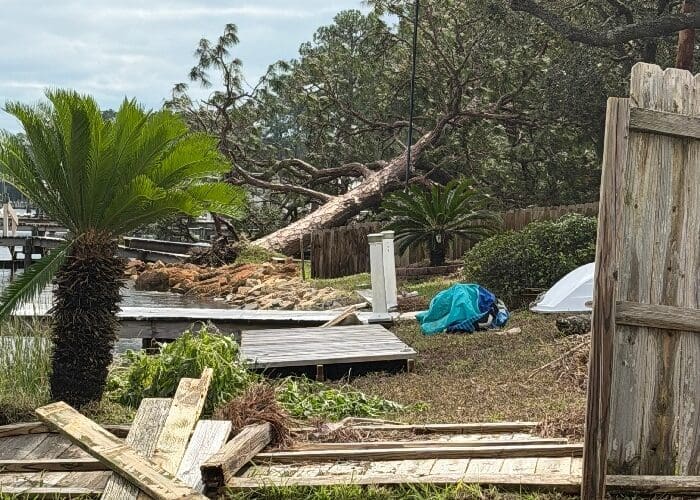
TY: When we headed out at 5:30 the morning after, it was still dark, and we saw downed power lines everywhere. Our Public Works crews and others were getting out and assessing things. And then by midmorning there were people everywhere asking where they could help, many of them with damage of their own.
BW: That’s the image I’ll keep from Isaias. Nobody waited to be asked. Neighbors showed up with chainsaws and rakes; others brought water and coffee. People who had lost part of a roof helped those who had lost more. I spent that first week running a volunteer chainsaw crew, clearing private property our City crews can’t legally touch. We reached more than 40 homes, most belonging to seniors who had no way to do it themselves. You hear “neighbor helping neighbor” after every storm. Here, you could see it on every block. Many remember Opal in 1995, and many more watched what Michael did to our neighbors to the east in 2018. They know what it means and how it feels when help shows up.
TY: Now we’re in the final stretch of debris removal, and this is the stage where patience runs thinnest. The first days after a storm feel urgent, and everyone is moving fast. The last few weeks are slow, and the piles at the curb are a daily reminder of what happened.
BW: I see the piles too, and I completely understand the frustration. Crews work through the city in passes, and the volume after a storm like this is enormous. As of Oct 28, we’ve already removed over 20,000 cubic yards of debris from the city. That is 1,000 dump trucks full of branches and boards! This is the part of recovery no camera covers, and it’s where patience matters most. Please bear with us a little longer. Removing these piles for safety is our top priority; kids walking to school, elders walking the sidewalk, Halloween neighborhoods. That is why we are running 6 storm removal trucks/cranes each day until our community is completely restored to pre-storm conditions. We are getting there, and every pile that disappears is one more sign of Destin getting back to itself.