

































By Dave Holland
He asked them, “What are you discussing together as you walk along?”
They stood still, their faces downcast.
One of them, named Cleopas, asked him, “Are you the only one visiting Jerusalem who does not know the things that have happened there in these days?”
“What things?” he asked.
“About Jesus of Nazareth,” they replied. “He was a prophet, powerful in word and deed before God and all the people. The chief priests and our rulers handed him over to be sentenced to death, and they crucified him; but we had hoped that he was the one who was going to redeem Israel.” — Luke 24:13–21a

When Life Feels Bruised
Hope paves the road to faith.
Two disciples walked toward Emmaus after the death of Christ. They carried heavy hearts and slower steps. They had hoped Jesus was the promised Messiah. Now that hope felt bruised—like a candle in the wind—still burning, but barely. Yet it hadn’t gone out.
And that matters.
Hope is often the first small step faith takes. We may begin with a shaky maybe, but nurturing it matures it into trust—steady and rooted in what God has promised.
The Difference Between “I Hope So” and Biblical Hope
In everyday conversation, hope usually means something that might happen. We say, “I hope so,” when we’re unsure of the outcome.
Scripture uses the word differently.
Biblical hope is not wishful thinking. It is a confident and settled expectation anchored in God’s character. It looks beyond present pain and says, “God has spoken, and God will be faithful.”
Throughout the Bible, hope is tied to what God has promised—most clearly revealed in the resurrection of Jesus Christ. That resurrection turns hope into something solid. It steadies the soul in suffering and strengthens believers to endure the present while looking toward eternity. Alongside faith and love, hope stands as one of the great Christian virtues—quietly shaping how we live, how we wait, and how we persevere.
ANCHORS OF CHRISTIAN HOPE
Several truths help us understand biblical hope more clearly.
First, biblical hope expects God’s goodness—even in unwelcome events.
It doesn’t call pain “good,” but it believes God can work good through pain. That kind of hope turns even difficult days into occasions for gratitude—not because the circumstances are easy, but because God is faithful.
Unlike worldly hope, which is often uncertain, biblical hope—elpis in the Greek—carries assurance. It steadies the heart with the confidence that God will fulfill His promises and secure eternal life. As the Apostle Paul writes in Romans 8:24–25, For in this hope we were saved. Now hope that is seen is not hope, for who hopes for what one sees? But if we hope for what we do not see, we wait for it with patience.
Second, Christ Himself grounds Christian hope.
The resurrection of Jesus confirms God keeps His word. Because Christ lives, our hope is a living hope—not a vague optimism, but a reality anchored in a risen Savior and a coming kingdom.
Third, hope anchors the soul in life’s storms.
Hebrews 6:19 describes hope as a sure and steadfast anchor. When circumstances threaten to overwhelm us, hope keeps us from drifting—holding us steady until clarity and peace return.
Fourth, hope breaks passivity and produces perseverance.
Genuine hope doesn’t numb us; it strengthens us. It produces courage, patience, and endurance. It moves believers toward faithful living and loving service. Paul captures this in 1 Corinthians 13:13, reminding us that faith, hope, and love remain the greatest virtues.
Finally, biblical hope looks forward with confidence.
It fixes its eyes on God’s ultimate redemption—resurrection life, restored creation, and eternal fellowship with Him—while still shaping how we live today. Through the prophet Jeremiah, God speaks these familiar words of reassurance, For I know the plans I have for you, declares the Lord, plans for welfare and not for evil, to give you a future and a hope. Jeremiah 29:11.
Back on the Road to Emmaus
The disciples on the road to Emmaus had plenty working against them. Doubt weighed on their hearts. Confusion clouded their understanding. Grief drained their strength.
Yet hope still lingered: But we had hoped that he was the one who was going to redeem Israel.
That hope—imperfect as it was—became the first brick in the road back to faith.
And even here is the quiet mercy of God: while they were walking away in disappointment, Jesus Himself was already walking toward them—and He’s walking toward you.
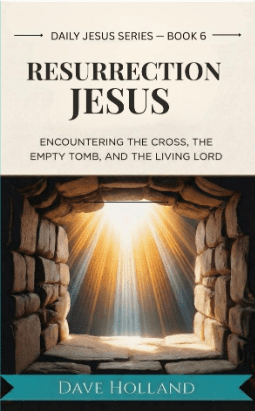
Dave Holland pastored churches for 38 years before retiring in Destin. His new book, Resurrection Jesus, is now available. Visit DaveHolland.org, or Amazon.com. Pastor Dave is available to preach and teach at churches and conferences. Contact him at DavidvHolland54@gmail.com.